A Tip of the Hat to Dave Infante at Fingers for the Best Image of the Year
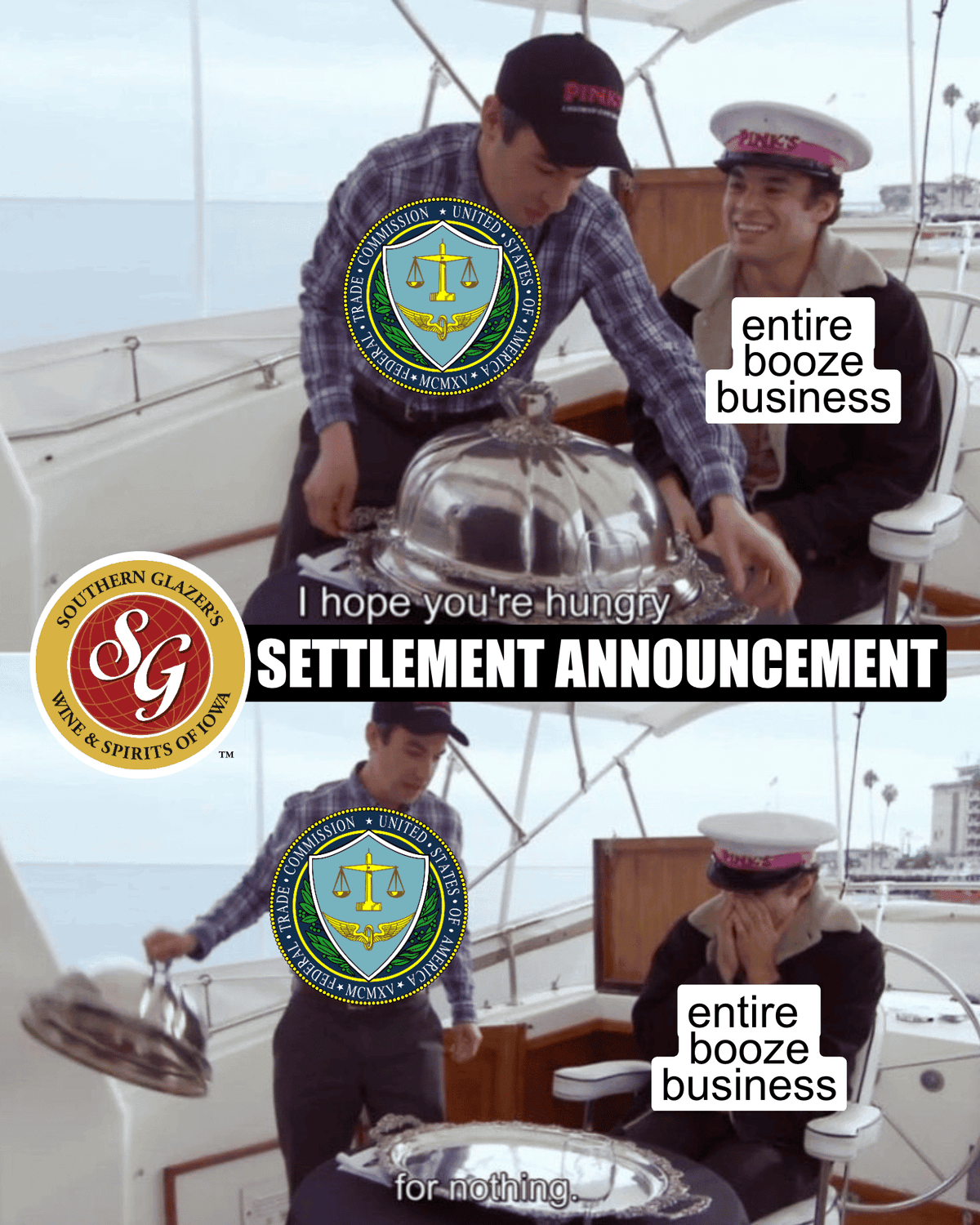
The problem with antitrust law is that it's a religion. It all depends on what you believe. For the last three decades, the overwhelming belief has been that if it "benefits the consumer" it's good and such "antiquated" antitrust laws as the Robinson-Patman Act are dead letters that are best left dead.
On the other hand, if you believe that big organizations – big business, big government, big nonprofits – require consumers to pzy higher prices simply because they are big, then you probably think Robinson-Patman was written on Mount Sinai.ti
For the last three or four decades, antitrust law has been based on the theory that anything that results in lower prices for the consumer is good. Thus, one merger after another has been approved because the parties would assert that it would result in "economies of scale" that would result in lower prices.
It's perfectly legal for Southern Glazer's or anyone else to charge large bev/al retailers less for a product that it charges smaller retailers when the difference is a result of lower cost of delivery. But the case also makes clear the discounts offered by Southern Glazer's went well beyond the lower cost of delivering many cases to a big retailer compared to a smaller retailer.
So, what's wrong with a large retailer getting big discounts? Two things, primarily. First, and most importantly, the large retailer can use the lower cost to driver mom-and-pop stores out of business, reducing competition. The result: what may save consumers money in the short-term may end up costing them more in the long run.
When there's little or no competition, innovation is reduced. And when there are fewer top jobs in an industry, fresh thinking inevitably tends to die out – it's just easier to do it the way we've always done it when there's no reason to change.
Comments ()