Why Would the Brown Family Want to Sell?
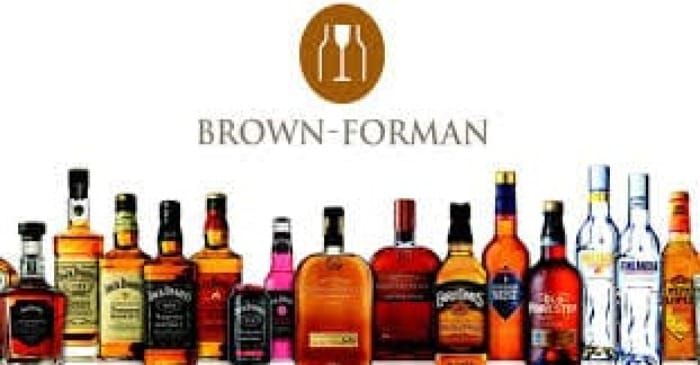
Ask yourself this question: If you were a member of the Brown Family that controls Brown-Forman, why in the world would you want to sell? Especially why would you want to sell to Pernod Ricard?
For Brown-Forman's fiscal third quarter, through Jan. 31, sales increased 2% to $1.1 billion (+1% on an organic basis). Pernod Ricard, sales plunged 15% in both its fiscal third quarter and first nine months. On an organic basis, Pernod Ricard's inched up 0.1% in the third period but were off 4.4% for the first nine months(compared to Brown-Forman's net sales decline of 2%, a result of the absence of the Sonoma-Cutrer transition services agreement).
Clearly, Pernod has good reason based on its most recent (until this morning) sales and earnings to look for a stronger partner. But how about its balance sheet. Pernod Ricard didn't release its balance sheet this morning.
But Brown-Forman's balance sheet shows total assets inched upward about $2.67 from the seond quarter to the third. It's current ratio (current liabilities divided by current assets) is 25.7%. If it had pay its current debts in the next 24 hours could it? It's short-term liabilities (accounts payable, accrued expenses, and deferred inome taxes) total $1,080,. It current assets – cash and cash equivalent, and account receivables total $1,274,000.
Brown-Forman's total assets as of as of Jan. 31 were $8.3 billion, nearly double its $4.22 billion of liabilities, giving it a total shareholders' equity of $4.082 billion,
At the moment, it appears Pernod Ricard has plenty of reasons to want to acquire Brown-Forman, but we see few if any reasons for Brown-Forman to want to tie its future to Pernod Ricard which has its hands full managing mpre than 200 spirits and champagnes distributed in 160 countries.
But there's another factor: The family. The descendants of George Garvin Brown have been very deliberate in their efforts to maintain family control through the generations.
The company has a two-class stock structure. Class A shares are voting shares; Class B are non-voting. The Brown Family owns 67.5% of the 169,129,183 shares of Class A common stock outstanding as of the close of business on April 30, 2025, according to the 2025 proxy statement. In other words, Brwon-Forman won't be sold unless the Brown Family wants it to be sold.
In addition to significant representation on the board as well as active employment within the company, beginning with the current chief executive, other family members are involved in the Brown Family Shareholders Committee which meets twice a year to ensure the founding family remains actively involved in the long-term stewardship of Brown-Forman.
During committee meetings, younger members are given their own briefings and, for the youngest members, coloring books about the company.
Finally, ownership of Brown-Forman ensures Brown Family members a prominent place in Louisville and Kentucky society. If we were betting, we'd say there's no reason for Brown-Forman to throw in its lot with Pernot Ricard and plenty of reasons not to.
Comments ()